Moving Beyond the Quick Fix to Build Forecourt Resilience
DIY fuel equipment maintenance can lead to errors, fines, compliance issues and more.
Sep 28, 2026 | 4 min read
By Joe O’Brien
Convenience store customers are surrounded by temptation—from enticing snacks and cold drinks to beer, tobacco and lottery tickets.
But for store owners and operators, one of the most costly temptations doesn’t live on the shelves. It exists behind the scenes, on the operational side of the business where the pressure to cut costs can often lead to risky workarounds.
With almost two-thirds of U.S. convenience stores either independently owned or part of a network of fewer than 10 stores, according to NACS State of the Industry data, the majority of U.S. c-stores do not have the benefit of a deep bench of resources to call on for support. They often lack engineering resources, dedicated compliance officers and volume-discounted service-level agreements. They shoulder the burden of managing daily store operations, regulatory compliance and equipment lifecycle management either alone or with minimal staff.
And from what I see, independent convenience stores operate with significantly tighter net profit margins and less financial cushion than regional or national chains. Unfortunately, this operational tension can create a strong financial incentive to bypass professional service channels in favor of purchasing equipment directly and attempting do-it-yourself (DIY) installation, repairs and maintenance.
DIY Service Risks
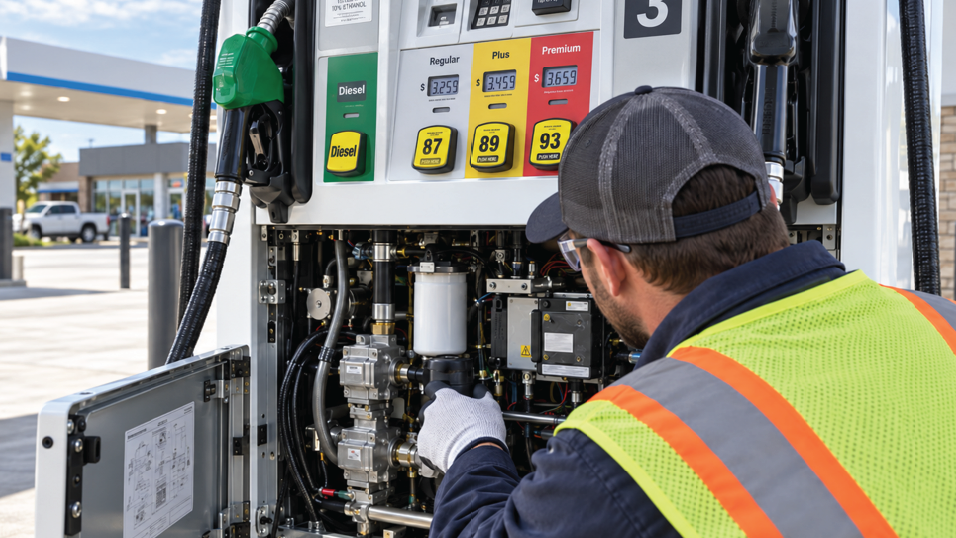
In fuel retailing, out-of-service equipment represents immediate revenue losses and threatens customer loyalty. Seeking to bypass field labor fees and avoid dispatch delays, store operators sometimes attempt repairs themselves rather than hiring a certified contractor. Although this approach may seem cost-effective initially, it typically increases the total cost of ownership over the lifecycle of the equipment, while introducing significant operational risks, including but not limited to:
Safety hazards: The National Electrical Code classifies the forecourt as a Class 1, Division 1 and Division 2 location. Following strict safety protocols to keep the forecourt explosion-proof and intrinsically safe is critical. Operators lacking training in the proper practices, including OSHA Lockout/Tagout procedures, risk severe property damage, environmental contamination and personal injury.
System leaks and inventory losses: Incorrectly installing fueling system equipment—even seemingly basic parts like hanging hardware—can cause leaks and lost inventory. Common culprits include overtightening fittings, improperly applying sealants and mishandling calibrated components.
Compliance delinquencies: Attempting DIY testing, failing to meet calibration tolerances, experiencing a release or failure to maintain consistent compliance record-keeping will trigger formal enforcement action. Regulators can issue steep fines, halt fuel deliveries or shut down an operation altogether.
Voided warranties: Fueling system equipment, including fuel dispensers, electronic payment terminals and automatic tank gauges (ATGs), is manufactured and certified under strict Underwriters Laboratories (UL) and National Type Evaluation Program (NTEP) standards. Major manufacturers explicitly state that work performed by parties not formally recognized as authorized service organizations invalidates warranty coverage.
Follow-up repairs and unforeseen costs: If you order and install a third-party, reconditioned or non-OEM replacement component online, you’ve relieved the manufacturer of product liability in the event of a failure. If that component suffers a subsequent major component failure, the owner absorbs the full cost. Furthermore, evidence of DIY repairs or uncertified equipment modifications can jeopardize state reimbursement fund claims. Finally, if a compliance lapse forces a shutdown, operators will face the high cost of premium emergency dispatch rates to have a certified technician clear the violation.
Mitigating Risk Through Certified Technical Partnerships
Rather than relying on quick fixes, utilizing trained technical resources to install and service fueling system equipment allows independent retailers to protect their investments and minimize operational risk.
For many operators, the most direct path to expert support is through Authorized Service Contractors (ASCs), who maintain formal accreditation from equipment manufacturers and who employ technicians trained on component specifications.
Wholesale fuel distributors and jobbers offer another valuable pathway to professional technical service. Because wholesale fuel distributors and jobbers maintain a financial interest in ensuring their retail customers remain operational and compliant, many maintain relationships with ASC networks or employ certified technicians in-house. Independent operators, in partnership with their jobber, may have access to negotiated service rates.
Finally, there are some important resources to assist independent fuel marketers to find the right service contractor. First, the PEI Directory helps companies identify qualified petroleum equipment contractors in their geographic region. Second, equipment manufacturers often publish lists of authorized service contractors on their company websites. Third, reputable service contractors typically belong to their state and regional petroleum marketer associations.

Joe O’Brien
Vice President of Marketing
Source North America Corporation
Joe O’Brien is vice president of marketing at Source North America Corporation. He has more than 30 years of experience in the petroleum equipment fuel industry. The views expressed in his articles are his own and they do not necessarily reflect the views of Source North America.
