To Own or Host, That Is the EV Charging Question
As EVs become more established, retailers feel out how to incorporate charging into their stores.
Oct 08, 2026 | 2 min read
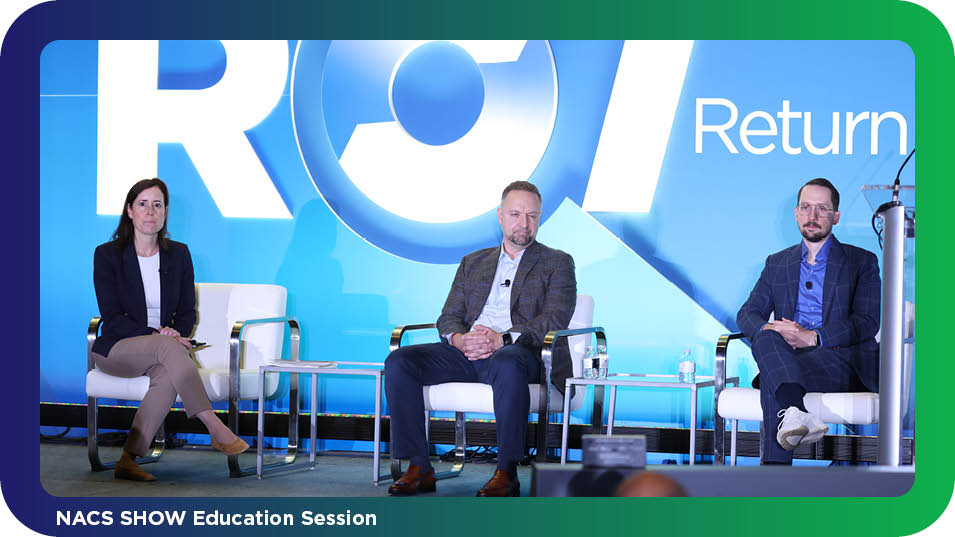
During Wednesday’s Education Session “Ownership vs. Hosting: An EV Charging Case Study for Convenience Retailers,” Vince Cipollone, Wawa’s senior director of retail fuels, and Aaron Young, director of sales and business development of Electrify America, explored the pros and cons of owning EV charging stations.
With 1,200 stores across 11 states, Wawa currently offers more than 280 charging locations and plans to expand its footprint. Cipollone said roughly 8% of the fueling business is currently devoted to EV. However, he said Wawa is pursuing the potential: 30%. “It will be a long goodbye for liquid fuels,” he said, as “97% of our customers still drive internal combustion cars.”
By contrast, Electrify America’s Young said although home charging currently limits the opportunity for growth, there is an emergent segment that is looking for public charging stations. “If you assume customers might spend $7 in your store, that is potentially $125 million due to incremental sales and new behavior,” said Young.
Both speakers agreed there is currently money to be made, despite the nascent stage. On the host side, there is revenue and profit share. On the “own” side, you have 100% of the revenue, but you also take on the risk. Cipollone said owners will benefit as more customers convert to EV versus losing liquid fuel customers entirely. But electricity is expensive and getting the business model right is critical. “It requires you do homework to evaluate site selection, the costs of a charging station and negotiate with utility companies,” he said.
Young agreed: “There is a good operational model with owning. That is why we created our own white label model.”
Wawa is currently taking a test-and-learn approach with white labels by collaborating with Electrify America on six locations in Pennsylvania, according to Cipollone.
“Who you partner with is critical,” Cipollone said. “Your partner needs to have the financial wherewithal. It is a long-term investment in the early years. One of the common denominators is they have other revenue streams … Electrify and Tesla. Do your research. Ask lots of questions. Eventually we are going to wean ourselves to independence.”
Electric Vehicles
