Fixing the 7-Cent Problem
On average, retailers are losing money on every inside transaction. AI checkout could bring back those margins.
Oct 19, 2026 | 3 min read
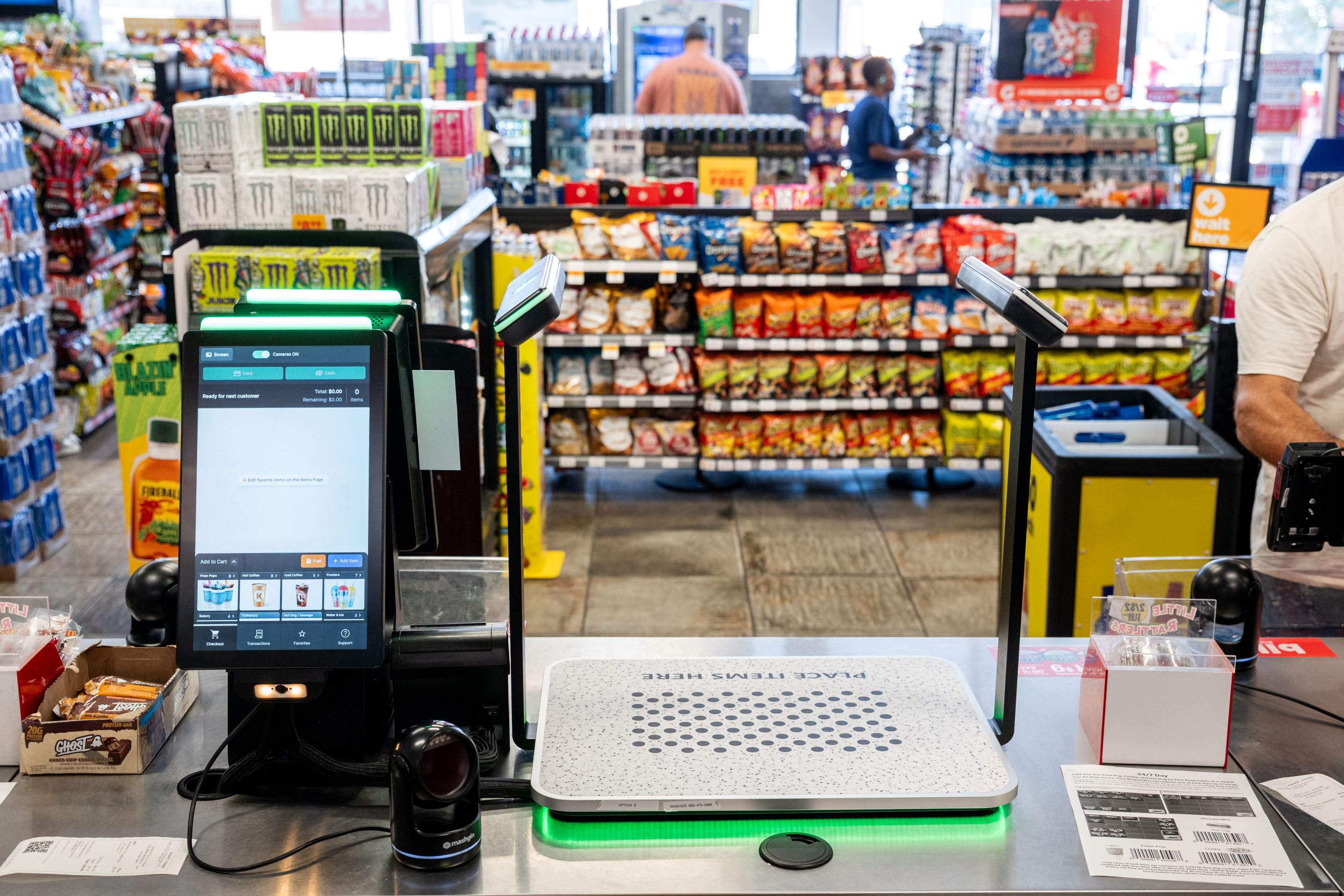
This article is brought to you by Mashgin. 
In a business where every dollar matters, convenience retailers are spending a lot on labor.
Wages and benefits grew to $90.3 billion in 2025, up 3% from 2024 and 25.8% since 2021, according to NACS State of the Industry (SOI) Report® of 2025 Data. Last year was the first time the figure topped $90 billion.
Expenses in general are on the rise. Accounting for the cost of goods and other operating expenses, retailers saw an average in-store operating profit net loss of 7 cents per transaction in 2025, according to the report. Wages and benefits are the largest expense category, so adding additional employees can be challenging.
But with the speedy experience that convenience customers expect—the average store visit only lasts three or four minutes—many retailers find themselves facing a dilemma.
“If operators leave staffing as it is, they lose thousands of transactions a year,” said Jack Hogan, senior vice president of partnerships at Mashgin. “If they add cashiers, they pay tens of thousands of dollars a year for coverage they really only need for about 90 minutes of rush throughout the day.”
In a study, Mashgin analyzed 65 high-volume 15-minute periods across six stores. During those periods, there was a line or at least one customer actively checking out.
Mashgin’s study found that in stores with only traditional staffed registers, there were an average of 12 transactions with one register and 22 with two registers during that 15-minute period.
But in stores with one staffed register and one Mashgin AI-assisted checkout unit, that number grew to 30 transactions in 15 minutes. And that extra throughput scaled with additional units: A single cashier using two of Mashgin’s Power Counter machines can run 43 transactions in that same 15-minute span. That’s more than three times the throughput of a single traditional register.
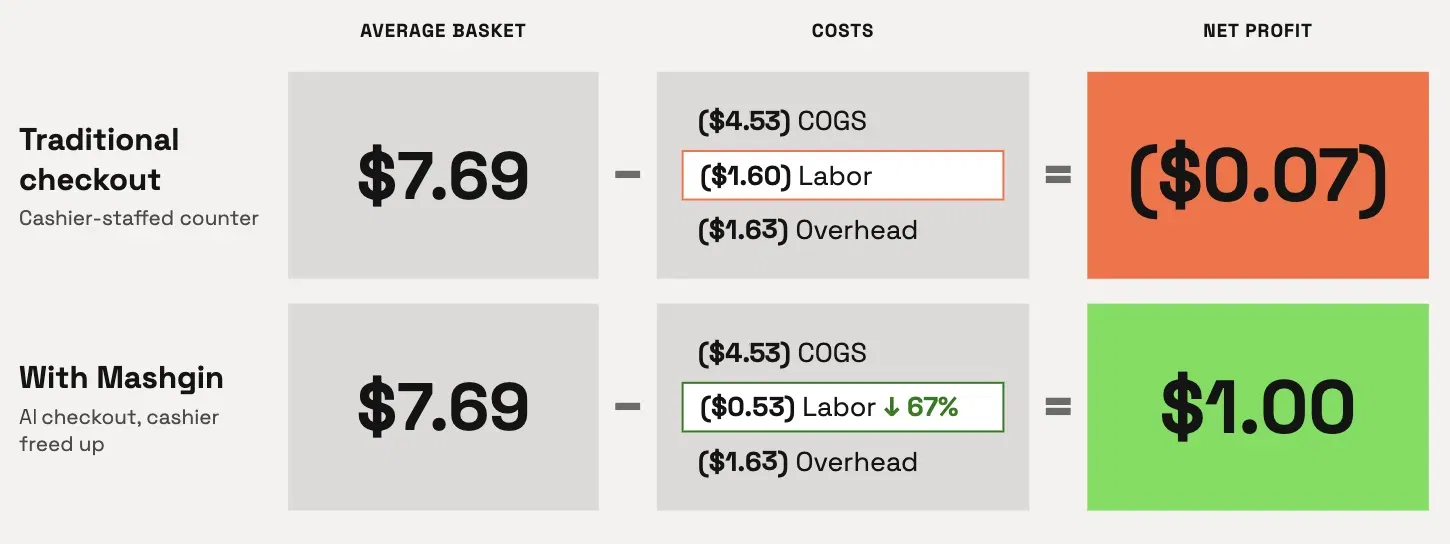
According to the SOI Report, direct store operating expenses, including labor, averaged $3.16 per inside transaction in 2025. By doubling or tripling cashier efficiency, stores can reduce the labor cost per transaction, potentially moving their inside sales operating profit from a net loss to a net gain.
A more efficient checkout process can also allow employees to redirect their time and focus on tasks that benefit from a human touch. According to Mashgin, an AI-assisted checkout unit can help reduce the pressure on employees, which can contribute to a lower turnover rate. “When firms are able to empower employees to create more value, they are able to pay them some of that bonus and keep them around much longer on average,” Hogan said.
He added that Mashgin machines can reduce stress for store employees during their shifts.
“On multiple occasions, I've seen staff put badges on their Mashgin, giving it a name like ‘Marvin the Mashgin,’” Hogan said. “They come to see it as a valued team member that doesn't call in sick or leave them behind for another job.”
This is the first article in a two-part series from Mashgin. Look for part two, which will explore the impact of long lines—and how to make them shorter.
Artificial Intelligence Checkout Systems
