TEI Releases New Analysis on Mid-Level Ethanol Blends
The research outlines opportunities and challenges associated with ethanol blending beyond E15.
Jul 30, 2026 | 2 min read
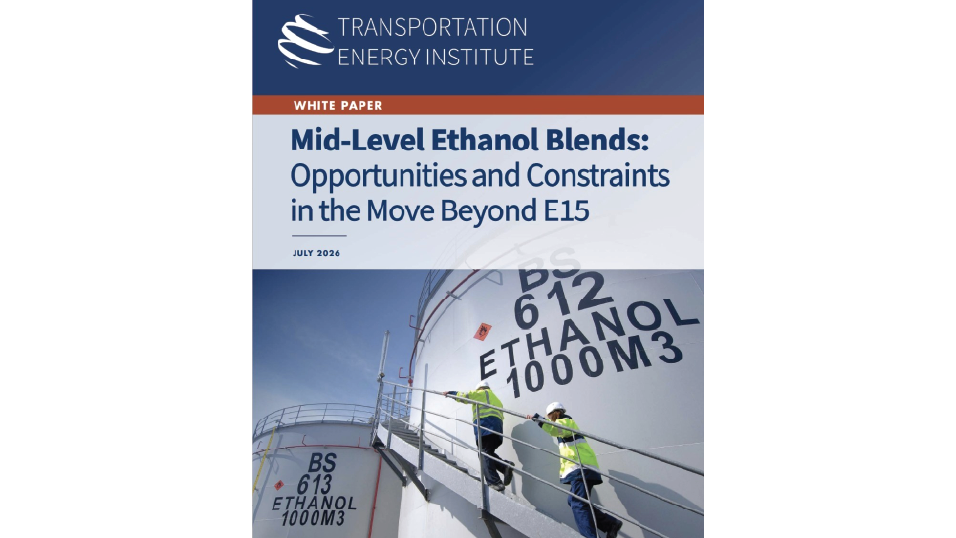
The Transportation Energy Institute (TEI) today released a new whitepaper, Mid-Level Ethanol Blends: Opportunities and Constraints in the Move Beyond E-15, providing a comprehensive overview of the opportunities and challenges associated with increasing ethanol blend levels in gasoline amid evolving market conditions.
With more than 96% of vehicles in operation powered by internal combustion engines, liquid fuels will remain central to the transportation sector for decades. However, improving vehicle efficiency, vehicle electrification and changing demand dynamics are contributing to a declining gasoline market. As a result, maintaining current ethanol volumes, let alone increasing its utilization, would ultimately require the market to move beyond E15. The report evaluates both the opportunities and challenges associated with higher ethanol blends and examines the regulatory frameworks affecting the ethanol market, environmental and economic impacts, vehicle compatibility and performance considerations, consumer value and infrastructure hurdles that could affect retail adoption.
The analysis highlights that ethanol offers lower life-cycle carbon intensity compared to gasoline, with increasing blend levels generally associated with greater emissions reductions. It also outlines additional potential benefits, including improved engine performance due to ethanol’s high-octane rating, economic contributions to U.S. agriculture and enhanced U.S. energy security through greater use of domestic fuel resources.
At the same time, the whitepaper identifies significant barriers to broader adoption of mid-level blends (generally defined as 16%–50% ethanol). These include vehicle compatibility concerns, infrastructure limitations, regulatory complexity and the need to mitigate misfuelling risks. Addressing these challenges will be essential if the market is to accommodate ethanol blends above E15 on a larger scale.
Key findings include:
- Maintaining current ethanol volumes in a declining gasoline market may ultimately require blends above E15.
- Regulatory clarity is required to enable a market for mid-level ethanol blends to develop.
- Assuring vehicle and fuel equipment compatibility is a prerequisite for market adoption.
“As the U.S. increasingly seeks domestic energy sources to reduce its exposure to geopolitical disruptions, many are looking towards renewable fuels like ethanol as an option,” said TEI Executive Director John Eichberger. “However, as vehicles become more efficient and gasoline demand declines, incorporating higher volumes of ethanol may require gasoline-ethanol blends above 15%. This paper is designed to provide a foundation upon which discussions about moving beyond E15 can develop.”
