State of the C-Store Industry: Profit Under Pressure
NACS research team shares key insights from industry data that help retailers benchmark against their own P&L statements.
Aug 31, 2026 | 5 min read
By Chrissy Blasinsky
At the start of 2026, NACS reported a decline of about 200 stores from the industry’s overall U.S. store count.
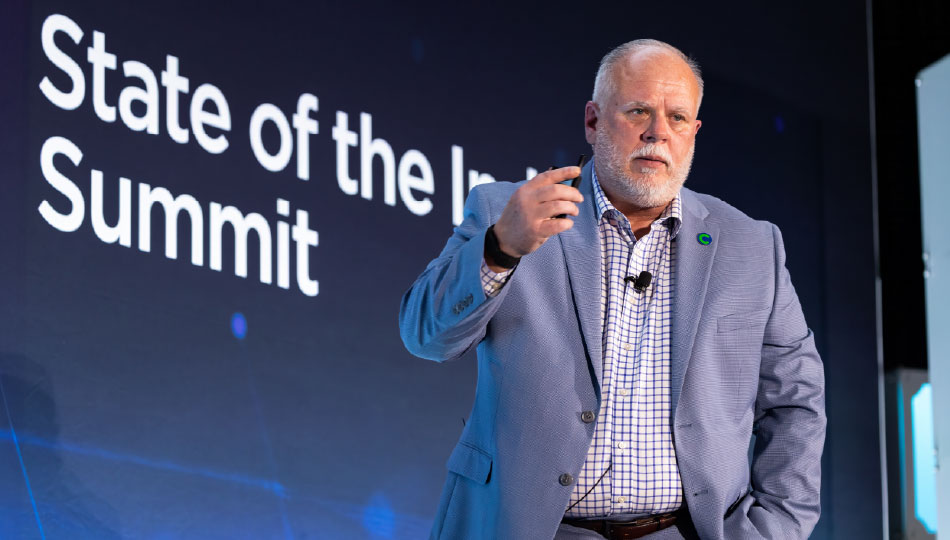
There are differing perspectives on store count fluctuations. While some may consider a drop in store count as a negative, others see it as a sign of progress. “We don’t believe the [store count decline] is a real gauge of the health of the industry,” said Chris Rapanick, NACS managing director of research.
He added there are cases “where churn in the store count is a good thing,” suggesting that site closures often convey that older, non-profitable sites that are no longer meeting today’s standard have gone offline to make room for newer next-gen convenience stores.
In the first of the State of Convenience Series webinars, “Profit Under Pressure,” Rapanick recapped industry sales in 2025 and reminded participants that the overall total sales decline was due to fuel sales, which were down 5.4%. Although fuel volume (gallons sold) was up 0.5% year over year, gas prices led to the decline in sales.
Transaction counts have been declining, which NACS State of the Industry data separates as total transactions based on forecourt and inside the store. In 2025, pump transactions were down considerably, and inside transactions were down 1.7% as well for a total transaction decline of 3.0%.
For the first six months of 2026, Rapanick noted that transaction counts suggest consumers are behaving differently at the pump than in previous years.
“We know when gas prices are lower, transaction counts are going to decline. When gas prices go higher, as they have in 2026, we would expect customers fill up more frequently because they're not getting as much for their money. That’s something we haven’t been seeing this year,” he said, noting that consumers may instead be eliminating other discretionary expenses that are non-fuel related.
The past five years have seen a significant bump in direct store operating expenses (DSOE), which continue to outpace pretax profit—and the inside business is not driving enough gross profit to cover the rise in DSOE. Rapanick highlighted how the NACS State of the Industry Report® can help retailers benchmark where they are on their expenses against the industry average.
For example, wages and benefits increased 4.2% in 2025, which were driven by workers compensation at 9.8%, and health insurance and other benefits at 10.5%. “If your other benefits grew by 20% and you don't have some return on investment there, like improved turnover or better staff, then you should be thinking about that,” he said.
Rapanick also noted that several other expenses increased in 2025: utilities, IT expenses and facility expenses. “These three have been repeat offenders over the past couple years,” he said. While they may not receive as much attention as other bigger line items, they can add up pretty quickly.
IT expenses, which grew during COVID, have been increasing due to operators focusing on digital solutions that enhance the customer experience, like touchscreen kiosks for made-to-order foodservice programs and self-checkout. “A 25% increase [in 2025] is pretty big, even if it's only $265 more in average spend,” he said.
Rapanick suggested several ways that retailers can use the State of the Industry Report to develop a growth strategy in the next three to five years, and determine areas that need attention.
If your business is not stable, focus on operational efficiency and expense management:
- Benchmark every expense line—leave no stone unturned.
- Conduct a gross margin audit. If your sites are not in line with industry averages, review your wholesale price or retails.
- Retaining customers and growing their basket is much easier with your current customers than going out and finding new customers.
- What does a square foot of selling space earn in GP dollars? Can you monetize unprofitable space in your store?
- Is your staff efficient? What’s your in-store GP per labor hour? What are the opportunities for improvement?
If your business is stable, focus on optimization and growth planning:
- Review your cash reserve structure: look to hold 3-6 months of fixed costs
- Reduce days of inventory, especially in foodservice. If business is consistent, you have data to right-size par levels.
- Delay discretionary CapEx, unless ROI is quick and measurable. Consider lease vs. buy.
- Audit at the subcategory or SKU level, not just the category level.
- Consider strategic, small price increases on impulse items.
- Conduct a merchandise shrink audit. How do you stack up against SOI averages?
If you’re investing, focus on differentiation and capability planning:
- Look at underperforming chains, or those that want to exit the industry. Acquisition may be your growth engine.
- Consider fuel pricing/margin management software to improve margin capture when gas volume is flat.
- Evaluation EV charging as long term site differentiator.
- Consider investment in a true loyalty program—loyalty data is gold when working with your suppliers.
- Take foodservice to the next level by considering a made to order program or a branded QSR franchise.
“The industry’s challenges are real, so think about where you are in those three areas of planning on the profitability continuum,” suggested Rapanick, noting that the industry benchmarks contained in the State of the Industry Report can help operators balance short-term survival with long-term preparation.
“Profit Under Pressure: The State of Convenience Series Part 1” is available on demand.

Chrissy Blasinsky
Digital & Content Strategist
NACS
Chrissy Blasinsky is the digital and content strategist at NACS. She has been with the organization for over 21 years. She joined NACS as the manager of communications and as managing editor of NACS Magazine. She transitioned to the strategic communications team and works with a diverse team on social media and content strategy for NACS communications platforms. Chrissy also manages the NACS Ideas 2 Go video series that debuts each year at the NACS Show, and serves as a subject matter liaison on industry topics related to foodservice, inside merchandise and food safety.
